

Concerns about AI’s future could drag down GDP
As AI-fueled growth projections face scrutiny, bond markets are beginning to adjust
5 min read
KEY POINTS
- Inflation, economic growth and the nation's fiscal position all play a role in shaping longer-dated Treasury yields.
- Stable long-term inflation expectations suggest rising 10-year yields have largely reflected stronger growth expectations and higher real returns..
- As questions emerge around the sustainability of AI-driven investment and economic expansion, Treasury yields have retreated and markets are reassessing future growth prospects.
The reason why interest rates move is important. While the shorter end of the Treasury yield curve (out to about two to three years) is highly dependent on Federal Reserve monetary policy and the outlook for any changes to current policy, the longer end of the Treasury curve is impacted by numerous factors. These include: inflation, growth and the nation’s fiscal position, which are among the leading explanations of long-term yield movements.
Knowing this allows us to decompose the yields on longer bonds, like the 10-year Treasury, and understand the importance of the factors involved. Candidly, the impact of our fiscal position is difficult to ascertain and quantify. We have been worried about the nation’s fiscal position since I started my career in the bond market in 1982. On one hand, there have been times when the bond market has played a bigger role in limiting fiscal policy than it is now. On the other hand, it is hard to disagree with the idea that a fiscal position of running 6% annual budget deficits, as we did in fiscal year 2026, and spending nearly 20% of tax revenues on interest expenses, all while unemployment is at 4.2% and gross domestic product (GDP) growth is positive, is not having some effect on long-term rates. The size of this effect is hard to say but, in relative terms, we remain the cleanest shirt in a pile of dirty fiscal laundry. France anyone? The direction of the nation’s fiscal position is not one that will lead to regaining a AAA/Aaa credit rating.
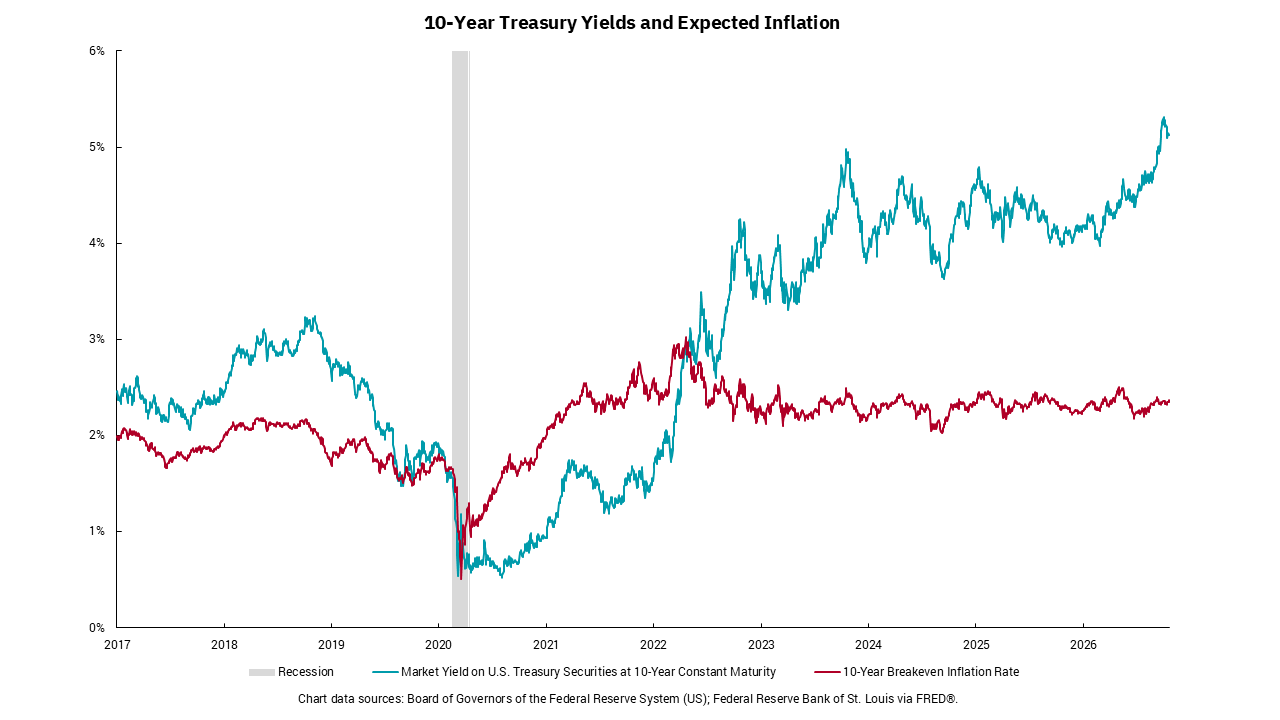
When considering the impact of inflation, it becomes a bit more quantifiable, as we have several longer-term inflation measures to consider. Our chart this week uses the 10-year breakeven inflation rate from the Fed. When viewed from this perspective, it appears clear that higher long-term inflation expectations are not the primary reason for higher rates. Shorter-term inflation expectations have been impacted by higher energy prices, but longer-term inflation expectations have remained remarkably stable.
This means higher rates have been leading to higher “real” rates of return, which points to increasing growth expectations as the primary driver of increasing longer-term rates. Frankly, this is not all bad as our indebted fiscal position means additional growth is vitally important.
The bond market’s recent action illustrates this point. Despite the Consumer Price Index (CPI) and Producer Price Index (PPI) recently coming in hotter than expected, interest rates have fallen. Recently, the 10-year Treasury yield appeared headed toward a 5.5% yield. It has since reversed course and fallen below 5% as I write this. Why? Possible cracks in the artificial intelligence (AI) story have developed, leading to questions about the future growth from AI. Since the AI buildout is driving a material portion of our current GDP growth, questions about its future quickly morph into overall GDP growth. Also, lower growth will lead to rates declining—at least the portion of rates tied to growth, that is. Lower growth expectations might also take some pressure off the Fed from a rate-increase standpoint. Even so, the implications of reduced growth will be felt across capital markets.
Get By the Numbers delivered to your inbox.
Subscribe (Opens in a new tab)